The Rise of The Ghetto Politician Part 2
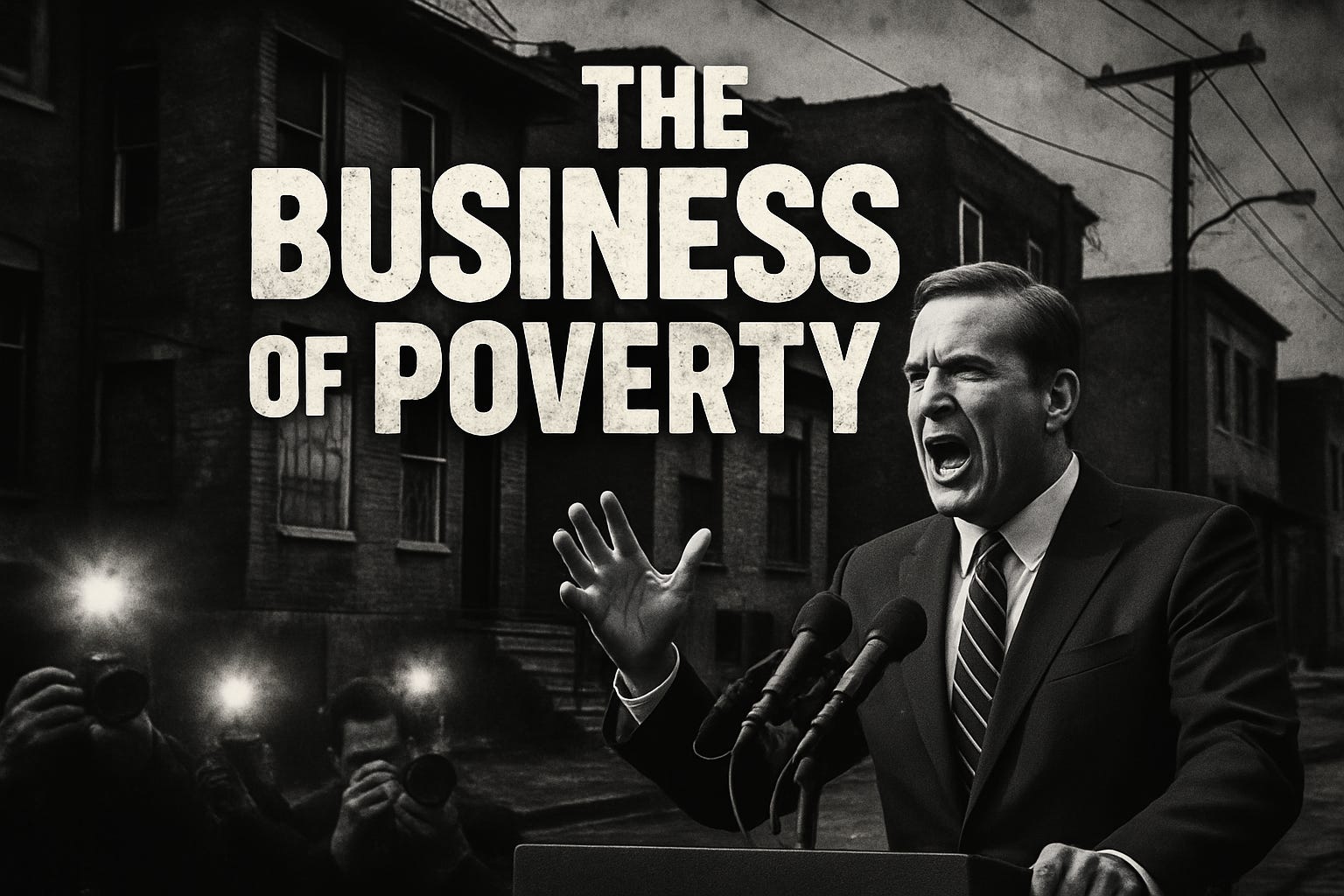
The Business of Poverty
The New Face of the Same Old Game
Listen up, fam. If you been following this series, you already know we ain't holding back. Parts 1 and now 2 laid the groundwork, but today we going deeper into how these so-called "representatives" been playing us.
Y'all ever notice how some politicians roll through the hood during election season, all smiles and promises, rocking their Sunday best, shaking hands and kissing babies? Then the moment they secure that position, suddenly they got amnesia about where they came from? That ain't no accident—that's the evolution of what I call the Ghetto Politician.
These ain't your grandaddy's community leaders who marched in the streets and put their bodies on the line. Nah, we talking about a new breed that learned how to weaponize our pain, package our struggle, and sell it to the highest bidder.
How the Game Changed
Back in the day, community leadership meant something real. When folks like Fred Hampton, Fannie Lou Hamer, or the early days of the Black Panthers were organizing, they was in the trenches. They wasn't just talking about feeding kids—they was actually cooking the meals. They wasn't just discussing police brutality—they was standing between the cops and the community.
But somewhere along the way, the script flipped. What started as genuine advocacy morphed into something else entirely. The blueprint changed from "serve the people" to "use the people to serve yourself."
Evolution Timeline
The new playbook goes something like this:
1. Come from the community (or at least claim to)
2. Build a platform on righteous anger about real problems
3. Get elected promising radical change
4. Immediately start cozying up to the same power structures you criticized
5. Deliver just enough crumbs to keep hope alive
6. Rinse and repeat every election cycle
Meanwhile, the schools still trash. The rent still sky-high. The police still wildin'. And the only thing that's changed is these politicians' bank accounts and closets full of designer fits.
The Modern Hustle
Today's ghetto politician is smoother than ever. They mastered the art of sounding revolutionary while acting conservative. They perfected looking "of the people" while living nothing like the people.
Take a scroll through their social media and you'll see the formula:
- Monday: Post about attending a community cleanup (that they showed up to for 15 minutes for the photo op)
- Wednesday: Share a passionate speech about housing inequality (while voting for developer-friendly zoning)
- Friday: Post throwback pic of them "in the struggle" (conveniently leaving out how they now live in the suburbs)
The disconnect between what they say and what they actually do for the community is wild. They'll shed tears on camera about poverty, then vote against minimum wage increases. They'll talk about "our children's future" while schools in their districts crumble.
Words vs. Reality
Let's keep it a buck—some of these folks got more in common with their "opponents" across the aisle than with the people they supposedly represent. The performance is for us, but the policy is for their donors.
Follow That Money
You wanna know the real story? Follow the money, straight up.
When disaster hits the community—whether it's floods, fires, or economic collapse—watch how quick these politicians show up with the cameras to announce some multi-million dollar initiative to "revitalize" and "empower." Big words, big promises, big money.
But then track where those dollars actually go:
- 40% to "administrative costs" (aka salaries for their friends)
- 30% to outside consultants (who coincidentally donate to campaigns)
- 20% to studies and reports (that tell us what we already know)
- 10% to actual community programs (that get big announcements but little follow-through)
The nonprofit industrial complex is real, y'all. These "community development corporations" and "urban renewal initiatives" become slush funds and job programs for political allies. The same names appear over and over—on nonprofit boards, as program directors, as consultants—and they all connected to the same politicians.
Money Flow Chart
Meanwhile, the hood stays the hood. The same blocks that were promised transformation 20 years ago still waiting. The same schools still got leaky roofs. The same parks still ain't safe for the kids.
The Community Impact
This ain't just about politics—this is about real lives. When I talk to elders in my neighborhood, they tell me they've heard the same promises from different mouths for decades. The psychological impact of that cycle of hope and disappointment is devastating.
Ms. Denise on 43rd Street told me: "Baby, I done voted for every smiling face that promised to fix this block since 1982. Now I can't even get them to return my calls about the abandoned building next door that's full of rats."
Mr. James who runs the corner store said: "They come through here talking about economic development. Meanwhile my business license fees keep going up, and I can't get a small business loan to save my life. But watch how quick they'll approve permits for another outside corporation to set up shop."
Before and After
The real tragedy is how genuine grassroots leaders get pushed aside. If you actually living the values, actually putting in work without the cameras, actually making sacrifices for the community—you become a threat to the established order. The system is designed to elevate those who play the game, not those who try to change it.
Real Ones vs. Fakes
So how do we tell the difference? How we separate the real from the fake? Here's the cheat code:
**Real community leaders:**
- Live in or near the communities they serve
- Have a track record that predates their political ambitions
- Put their own resources on the line
- Accessible to regular folks, not just during election season
- Willing to challenge power, even when it costs them
- Transparent about both victories and failures
**Ghetto politicians:**
- Only show up for photo ops and elections
- Career trajectory always moving away from the community
- Always talking about what they "going to do" instead of what they've done
- Only accessible through layers of staff and gatekeepers
- Comfortable with power, uncomfortable with accountability
- Only highlight wins, never acknowledge failures
Real vs. Fake Checklist
The most telling difference? Real leaders create more leaders. Fake ones create more dependents.
Breaking the Cycle
I ain't just here to complain—I'm here to spark action. Because the truth is, we keep falling for the okey-doke because we desperate for solutions. But we gotta be smarter than that.
Here's how we flip the script:
1. **Stop believing the hype.** Judge politicians by specific actions and voting records, not speeches and photo ops.
2. **Build community power outside of politics.** Mutual aid networks, community land trusts, cooperative businesses—these build real independence.
3. **Create accountability systems.** Regular town halls, community scorecards, and public tracking of campaign promises.
4. **Support authentic leadership.** When you see someone doing real work without the spotlight, amplify them.
5. **Be willing to withdraw support.** Politicians need to know there's a price for betrayal.
The most revolutionary thing we can do is stop looking for saviors and start building collective power. No politician—no matter how charismatic—is going to save us. The community saves itself.
The Last Word
The ghetto politician thrives because we been trained to accept performance over substance. We celebrate symbolic victories while material conditions stay the same. We mistake representation for power.
But the game is changing. A new generation is seeing through the smoke and mirrors. They understand that having someone who "looks like you" in office means nothing if they don't actually fight for you.
The days of the ghetto politician ain't over yet, but their time is running out. Because more and more of us are asking the question they fear most:
"What have you actually done with the power we gave you?"
And when they can't answer that question, we ready to take that power back.
*This is Part 2 of an ongoing series examining the phenomenon of politicians who exploit community struggles for personal gain. Follow @PovertyPimpSlayer for more unfiltered analysis.*
*Images created exclusively for this article. All rights reserved.*