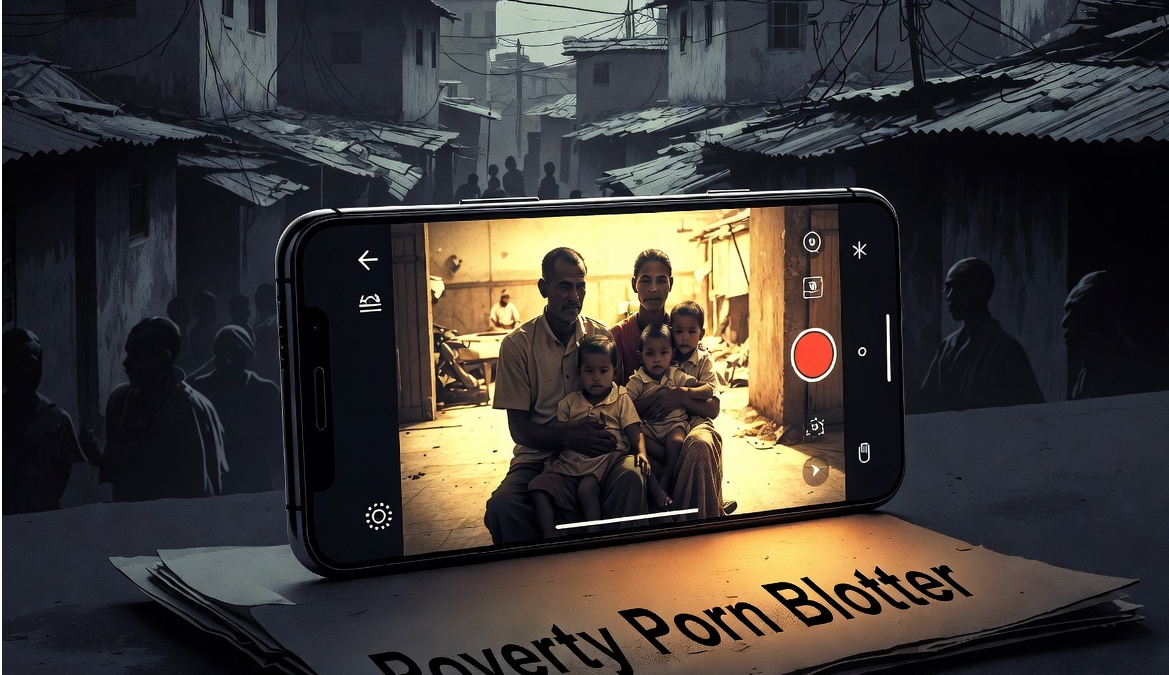
TRUTH TO POWER: Special Edition
Under The Poverty Porn Blotter | The Vault Investigates
Poverty porn is media that uses the suffering of poor people to generate attention, emotional engagement, money, or moral status for the person controlling the camera. In the Philippines, that logic has evolved into a visible charity influencer and savior gifting economy in which hardship is repeatedly turned into content, content is turned into traffic, and traffic is turned into revenue.
Under The Poverty Porn Blotter of The Vault Investigates, this special edition examines how that economy works, why it has become normalized, and what standards are needed if dignity is to come before branding, performance, and profit. This article is not against charity. It is against charity becoming a monetized content model that depends on the repeated exposure of vulnerable people.
Important disclaimer
This article is not a criminal indictment and it is not a verdict. It is an investigative editorial grounded in documented patterns, public-facing content, platform behavior, and accountability questions that remain unresolved.
The inclusion of any creator, channel, platform, or recurring content format does not automatically establish unlawful conduct or intentional abuse. It does, however, justify scrutiny where visible monetization, exposure of vulnerable people, unresolved consent issues, and repeatable content patterns appear in public view.
The standard used here is narrow and deliberate: do not call something exploitative without visible receipts from monetization, a clear power imbalance, exposure of vulnerable subjects, and repetition as a content model.
Why this special edition exists
The Vault Investigates is the investigative launchpad for this work. It was built to map, document, and analyze the mechanics of poverty exploitation, charity spectacle, and influencer-driven rescue content in the Philippines. Under The Poverty Porn Blotter, the goal is to identify patterns that are often dismissed as “just helping” even when the help is inseparable from branding, audience growth, and platform reward.
Truthdrop.io is the receipts and accountability layer. Where The Vault Investigates publishes the investigative narrative, Truthdrop.io preserves the record: screenshots, timestamps, links, public claims, contradictions, and recurring patterns. One platform builds the dossier. The other keeps the receipts alive when the feed moves on.
This model exists because temporary outrage is not accountability, viral criticism is not documentation, and emotional reactions are not standards.
The savior gifting model
The charity content format has evolved from occasional giving
into a repeatable digital model. A creator approaches poor families, struggling vendors, children, elderly people, workers in crisis, or distressed communities. A camera is already rolling. The need is framed in emotional terms. The creator steps in as rescuer. The audience is invited to cry, applaud, donate, subscribe, and return for the next upload.
A typical pattern looks like this:
A visibly vulnerable person is identified as a compelling subject.
The encounter is filmed before meaningful privacy or long-term consent questions are addressed.
The video is edited to maximize shock, gratitude, or redemption.
The upload generates views, engagement, payment traffic, and personal brand value.
The person on camera remains exposed long after the audience moves on.
What appears as spontaneous compassion is often structured content. The poor become recurring visual subjects. Hardship becomes the hook. Relief becomes the climax. The creator becomes hero, narrator, and distributor of aid at the same time.
This is the central issue of the poverty porn economy: not simply that help is given, but that human suffering is converted into a branded media product.
What The Poverty Porn Blotter tracks
The Poverty Porn Blotter is not built on vague outrage. It tracks repeatable indicators.
Filmed aid tied directly to channel growth, engagement, or personal branding.
Emotional thumbnails and titles built around visible hardship.
Repeated use of children, elderly people, or highly vulnerable adults as content anchors.
Public gratitude rituals in which recipients are expected to perform thankfulness on camera.
Little or no disclosure about revenue, sponsorships, platform earnings, or how much support actually reaches featured subjects.
No clear long-term protection for the people whose images remain permanently online.
When these elements repeat across videos, campaigns, and personalities, the question is no longer whether the content feels inspiring. The question is whether the industry has normalized exploitation behind the language of kindness.
Investigation and receipts
This special edition makes a deliberate distinction between investigation and evidence preservation.
The Vault Investigates develops the editorial frame, case logic, investigative standards, and public-interest argument. Its role is to name the pattern, connect the dots, and elevate what has been normalized into something that must be examined.
Truthdrop.io preserves receipts, maintains timelines, organizes contradictions, and keeps an evidence trail that can support researchers, journalists, readers, regulators, and affected communities. It is not built for spectacle. It is built so records survive deletion, reframing, rebranding, and strategic amnesia.
Together, these platforms are intended to do more than publish criticism. They aim to create a durable accountability ecosystem around a digital economy that has operated too long without enforceable standards.
Dignity-first standards
The end goal is not only exposure. The end goal is standards.
The Vault Investigates is working toward a dignity-first framework that can support policy conversations with Philippine government agencies, regulators, and relevant public institutions. That includes stronger standards for consent, transparency, child protection, verification of charitable claims, and mechanisms that reduce long-term harm from digital exposure.
At minimum, a dignity-first model should require:
Clear informed consent before filming and again before publication when possible.
Stronger safeguards and near-zero tolerance for filming minors in distress for monetized content.
Public disclosure of fundraising claims, sponsorship relationships, and distributions of aid connected to featured videos.
A documented process for subjects or guardians to request removal, correction, or privacy protection.
Independent accounting or verifiable reporting where large public-facing charity campaigns generate significant funds.
Serious discussion of whether recurring profits from poverty content should be shared with the people and communities whose lives created that value.
A dignity-first standard begins with a simple principle: a person in crisis should not have to surrender privacy, image rights, emotional exposure, or long-term safety in exchange for help.
Truth to power
This article is called Truth to Power because the savior gifting economy thrives where power is disguised as generosity. The person holding the camera controls the frame. The editor controls the story. The creator receives the praise. The audience receives emotional release. The subject often leaves with the least control over what happens next.
That is a power relationship. Once money, visibility, and audience loyalty are layered on top of it, it becomes an accountability issue.
Truth to power in this context means refusing the sentimental shield that protects monetized charity from scrutiny. It means asking whether the same act of giving would still happen without the thumbnail, the upload, the tears, the comments, the subscriber increase, and the payment links.
Independence and manifesto
The credibility of this project depends on structural independence.
The Vault Investigates is not political. It does not exist to serve politicians, parties, sponsors, advertisers, or NGO influence networks. It will not accept funding from politics, sponsors, advertisers, or NGOs. That position follows The Vault Investigates Manifesto, which treats independence as a condition of truth-telling rather than a branding line.
This work is sustained only through voluntary public support, including GoFundMe, Ko-fi, Stripe, Substack subscriptions, and Buy Me a Coffee. That structure is intentional: no sponsored narratives, no advertiser pressure, no hidden policy capture dressed up as philanthropy.
Independent watchdog work should not be confused with the aid itself. Supporting scrutiny is not the same thing as diverting direct help away from poor communities. A functioning public-interest ecosystem needs both immediate relief and independent oversight, especially when relief itself has become content.
The question behind the work
How can The Vault Investigates and Truthdrop.io continue building a real accountability framework when the effort relies in part on an anonymous former Puerto Rican community organizer from the 1970s, now known as The Vault Archivist, helping fund the think tank through a Social Security check and VA disability income?
How does a project remain durable, independent, and uncompromised when it rejects political money, sponsorships, advertising, and NGO funding and depends only on voluntary public support?
These are not side questions. They are part of the same accountability test being applied to the industry under investigation. If dignity, transparency, and independence are the standards being demanded from others, they must also define the structure of the platform making the demand.
Closing note
Under The Poverty Porn Blotter, this special edition does not argue that every filmed act of kindness is exploitation. It argues that the savior gifting vlogger economy has created conditions where exploitation can easily hide inside entertainment, charity language, and algorithmic reward.
The task now is bigger than criticism. It is to build standards, preserve receipts, protect dignity, and force the question this industry has avoided for too long: when poverty becomes content, who profits, who decides, and who pays the lasting human cost?